Calculate your estimate
Use measured inputs or actual supplier values. Results update instantly.
Geometric layer volume plus any entered allowance
Density and any extra allowance are illustrative, not product-certified. Verify quantities with your supplier.
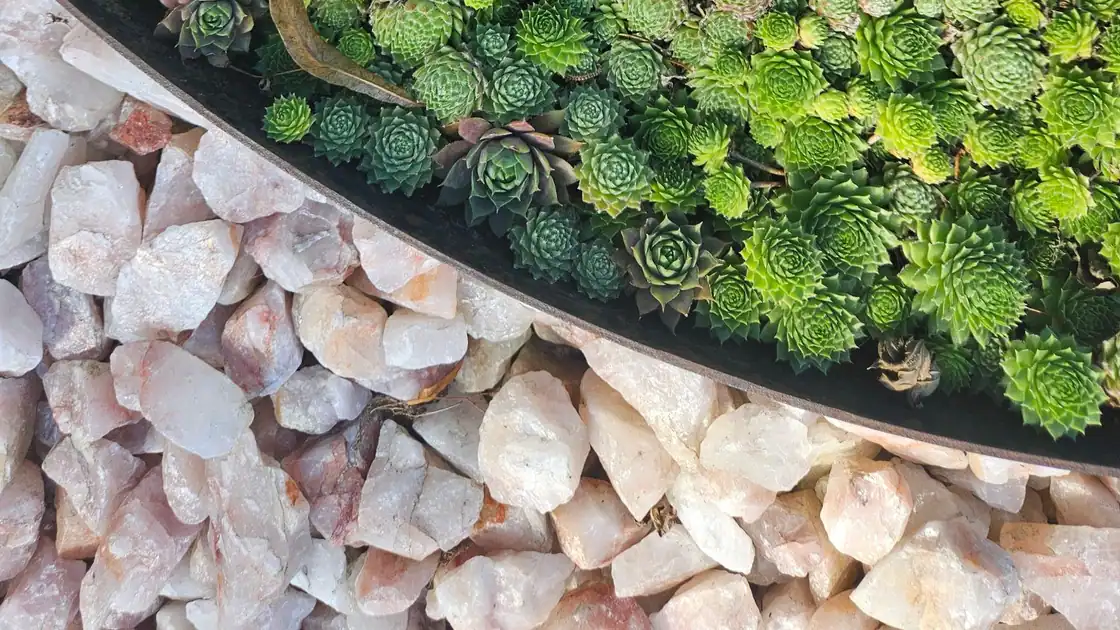
Decorative rock is usually ordered by the volume of the layer or by the weight of a specific stone. This guide shows how to calculate garden-bed coverage while accounting for stone size, irregular borders, voids and the difference between loose and installed material.
Landscape rock cubic yard formula
For a rectangular bed, multiply length and width in feet by the intended rock depth in inches, then divide by 324. For a garden area of 18 × 12 feet with a 3-inch layer, the geometric volume is 18 × 12 × 3 ÷ 324 = 2.00 cubic yards. This is a volume of the planned layer, not a guaranteed vendor bulk weight.
Decorative river rock, pea gravel and angular stone often come in different size ranges and shapes. The amount of rock that fits into one cubic yard of bulk volume depends on voids between the stones. When ordering by ton, use the exact product's bulk density rather than a universal stone conversion.
Before placing a large order, measure the actual installation area, including edges, features and slopes. If the bed has a pond or paved section, subtract areas that will not receive rock. For curved regions, calculate the appropriate geometric footprint rather than estimating from an enclosing rectangle.
Coverage chart for decorative rock at different depths
The table assumes the rock layer forms a reasonably uniform volume. At two inches deep, one cubic yard covers 162 square feet; at four inches it covers 81 square feet. These figures are independent of weight, but they do not choose the correct depth for your stone type.
Large stones can require a different placement strategy from small pea gravel. A shallow layer may leave soil visible between larger pieces. Ask the stone yard how it recommends specifying depth for the particular product and desired appearance.
| Rock depth | Cubic yards | One yard covers |
|---|---|---|
| 1 inch | 0.31 yd³ | 324 sq ft |
| 2 inches | 0.62 yd³ | 162 sq ft |
| 3 inches | 0.93 yd³ | 108 sq ft |
| 4 inches | 1.23 yd³ | 81 sq ft |
| 6 inches | 1.85 yd³ | 54 sq ft |
Pea gravel, river rock, crushed stone and boulders
Pea gravel typically comprises small rounded stones, while river rock is often marketed in larger rounded sizes. Crushed decorative stone has angular faces and may resist rolling differently. These products vary in color, feel underfoot and how they stay contained. Use the named material and supplier size range instead of treating every 'landscape rock' product as identical.
Large boulders, riprap or individual accent rocks should not be ordered using a simple shallow-layer cubic-yard formula. Their sizes and placement geometry may require counts, individual weights, available void dimensions or equipment considerations. A bed filled with loose pebbles is a different takeoff from a feature built with large stone pieces.
For a driveway's compacted structural aggregate, use the gravel cubic yard calculator and the actual aggregate specification. Decorative material should not be substituted automatically for a graded base.
Worked example: rock around a curved planting bed
Imagine a circular bed 14 feet in diameter with a small unfilled central circle 4 feet in diameter. The outer radius is 7 feet and the inner radius is 2 feet. The rock area is π × (7² − 2²) ≈ 141.37 square feet. At a uniform 2.5-inch depth, the geometric volume is 141.37 × 2.5 ÷ 324 ≈ 1.09 cubic yards.
Use the true exposed area, not the outer circle alone. If the design includes thickened edges, uneven subgrade or a dry creek depression, measure those separately. The volume of buried landscape fabric or edging is normally not a useful substitute for measuring the space that rock will occupy.
How to estimate the tons of landscape rock
Stone sellers often quote per US short ton, and some quote per cubic yard. Conversion requires a density appropriate to the particular rock and bulk state. Multiply cubic yards by short tons per cubic yard when that value is supplied. For example, a hypothetical product at 1.3 short tons per yard would make a 2.0-yard quantity approximately 2.6 short tons.
Do not copy the assumed density from a crushed-stone base if you are buying a different rounded landscaping rock. Moisture, size distribution and void space affect bulk weight. The cubic yards to tons calculator lets you enter a supplier density while keeping the volume estimate distinct.
Landscape fabric, drainage and stability planning
A stone bed's performance depends on more than the number of cubic yards. Proper grading, a suitable separator where needed, landscape edging and a plan for drainage all influence whether the bed remains attractive and functional. A liner or fabric should be selected for the job, not assumed necessary in every planting area.
Water can move through the spaces between loose stones, but that does not make every rock layer an engineered drainage system. A dry creek, French drain or runoff channel needs suitable gradients and outlets. Calculate bulk stone volume only after the drainage or landscape design is defined.
Comparing rock prices and deliveries
Ask for the specific stone name, size range, whether the quote is loose cubic yards or short tons, and how delivery is charged. Dense rock can reach a truck's payload limit before the bed is physically full. For small decorative beds, bags may be easier to position; for larger landscapes, bulk delivery may be practical.
Normalize the total quote by equivalent volume before comparing sellers. A lower per-ton price for a denser product does not automatically imply a lower cost per cubic yard of installed layer. The cubic yard cost calculator can compare material and delivery components if you enter like-for-like units.
Common landscape rock ordering errors
Common errors include confusing stone weight with volume, measuring a curved bed as a full rectangle, subtracting no unfilled space, selecting a universal depth and assuming a layer of large rock behaves like pea gravel. Avoid treating loose supplier weight as a guaranteed finished coverage figure.
The most reliable order starts with the exact rock product, intended finished geometry and supplier density or volume definition. Record any material allowance separately and confirm how the supplier rounds orders.
Dry-creek beds need a section-by-section volume takeoff
A decorative dry creek may have a shallow center channel, deeper pockets and wider turning sections. Treating the longest width and average depth as one rectangle can overstate or understate the actual rock layer. Divide the channel into short measured runs, record each run's average width and designed depth, then calculate cubic yards for each run.
Some dry-creek designs contain large accent boulders surrounded by smaller stone. Those elements may be quoted by individual piece or weight, while surrounding loose rock is estimated by bulk layer volume. Do not calculate a boulder's purchase quantity as if it were interchangeable with small decorative rock. Drainage design and outlet provisions should be evaluated separately.
How stone size affects the finished appearance
Two rock beds spread to the same geometric thickness may look different because of stone size, grading and surface texture. Larger rounded stone can leave visible gaps or rise above the intended layer, while smaller angular chip can make a more even surface. The calculator cannot predict the final appearance from volume alone.
Ask for a sample, verify whether the yard's advertised stone size is nominal or a range, and check how the product will be contained at edges. Photographing a sample area before buying the entire order can help confirm the chosen depth and color. Avoid translating that visual preference into an unsupported standard density.
Frequently Asked Questions
How many cubic yards of rock cover 200 square feet at 3 inches?
200 × 3 ÷ 324 = about 1.85 cubic yards of geometric rock layer.
How many square feet does one yard of rock cover?
At 2 inches deep, approximately 162 square feet; at 3 inches, 108 square feet; at 4 inches, 81 square feet, before material-specific adjustments.
How many tons does a cubic yard of landscape rock weigh?
It depends on product-specific bulk density, particle size and voids. Confirm the rate with your stone supplier.
Can I use this calculator for boulders?
Not reliably for individual large boulders. Use their dimensions, individual weights or a supplier placement plan rather than assuming a uniform loose layer.
Is landscape rock the same as driveway base gravel?
No. Decorative stone and dense-graded structural aggregate can have different gradations and applications.
Should landscape rock be installed over fabric?
The appropriate separator depends on soil, planting and drainage design. Fabric should not be chosen solely from the cubic-yard quantity.
References and calculation limits
Exact unit relationships are mathematical; material properties, practical ordering factors and local conditions require supplier or project-specific verification. The following publications support the relevant technical context.
For the site's core formulas and density limitations, see our Calculation Methodology. Need a different tool? Open the cubic yard calculator homepage or browse all related guides.
Related Calculators and Guides
Continue with a material-specific estimate, convert units, or review the calculation behind your result.